
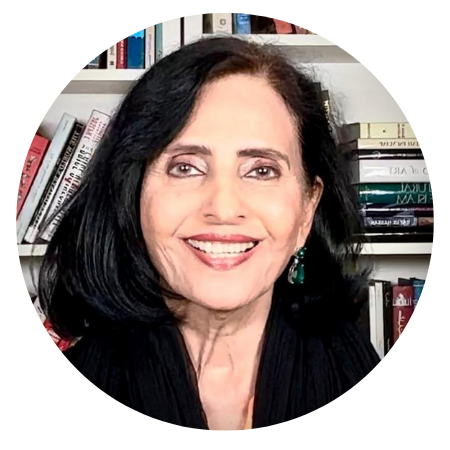
Dr. Shahnaz Khan
The Declining Global Order and war
In Pakistan, many people are interpreting the war between Iran, the United States, and Israel primarily through a religious lens—seeing it as a struggle between “truth and falsehood.” Such interpretations are understandable in a region where religion deeply shapes political narratives. But if we step back and examine the issue more carefully, the picture may look quite different.
What we see in headlines—the missiles, military threats, and geopolitical posturing—may only be the tip of the iceberg. Beneath the surface lies a much deeper story involving global economics, shifting power structures, and the future of the international order.
A key question emerges: Is the United States entering a period of decline? If so, why? And are we witnessing a historical turning point where the global system itself is beginning to change?
To understand this moment, we must go back to 1945, when the Second World War ended. That war, in many ways, was itself the result of deep crises within the global economic and political system. When the conflict ended, the international balance of power was transformed.
The British Empire, once so vast that it was said “the sun never sets” on its territories, began its slow decline. In its place, the United States emerged as the most powerful and wealthiest country in the world. But America did more than simply inherit power—it helped design a new global economic system.
This post-war system rested on three pillars.
First, the dominance of the US dollar as the world’s central currency.
Second, global financial institutions, such as the International Monetary Fund (IMF) and the World Bank, which became central players in shaping economic policies around the world.
Third, American military power, which underpinned the stability of this system.
Through these mechanisms, the US dollar became the backbone of international trade and finance. Countries across the world held dollars as reserves, conducted trade in dollars, and relied on institutions influenced by Washington for economic support and policy guidance.
The result was a global economic structure in which wealth and financial influence often flowed toward advanced economies, particularly the United States.
This system allowed the United States to expand its military power and sustain economic growth while taking on increasing levels of debt. For decades, this arrangement seemed remarkably stable.
Today, however, new pressures are emerging.
The national debt of the United States has now exceeded 34 trillion dollars, the largest sovereign debt in human history. Each year, the US government spends hundreds of billions of dollars merely to pay interest on that debt.
This represents a profound shift. The country that once dominated the world through industrial production increasingly relies on financial markets and debt-driven economic structures.
After the collapse of the Soviet Union in 1991, many in Washington believed that the United States had entered an era of permanent dominance. During this period, a model often described as neoliberal globalization spread across the world. Privatization, deregulation, and free-market policies became central pillars of global economic governance.
Yet the outcomes of this system have become increasingly controversial.
Within the United States itself, economic inequality has grown dramatically. Wealth has become concentrated in the hands of a small number of billionaires, while millions of Americans struggle with housing costs, healthcare access, and economic insecurity. The middle class, long considered the backbone of American society, has faced mounting pressures.
Globally, the gap between wealthy and poorer countries has also remained stark.
At the same time, new economic and geopolitical actors are rising.
China’s economic expansion has reshaped global trade. Russia continues to assert its geopolitical influence. Meanwhile, the BRICS grouping—Brazil, Russia, India, China, South Africa, and recently expanded members—has begun discussing alternative financial arrangements that could reduce reliance on the US dollar.
One of the pillars of American financial dominance, the petrodollar system, may also face increasing pressure. For decades, global oil trade has largely been conducted in dollars, reinforcing the currency’s central role in the international economy. But discussions about alternative settlement systems are gaining momentum.
If the dollar’s global dominance were to weaken significantly, the geopolitical consequences could be profound.
History shows that periods of economic strain often coincide with rising geopolitical tensions. Major wars in the twentieth century were preceded by economic crises and intense competition among great powers.
Some analysts therefore raise a controversial possibility: that global conflicts may, at times, serve as mechanisms through which major powers attempt to reshape economic and political systems.
Whether one agrees with such interpretations or not, it is clear that the United States itself is undergoing internal tensions. Political polarization has deepened, social divisions have widened, and public trust in institutions has been tested. These dynamics have produced unexpected political developments and movements across the American political spectrum.
Against this backdrop, tensions in the Middle East take on a broader significance.
The potential confrontation involving Iran is not merely a regional issue. It sits at the intersection of energy markets, geopolitical rivalries, and evolving economic structures.
This raises a final, important question. Are we witnessing the gradual unraveling of the global order that emerged after World War II?
Or are these tensions simply another chapter in the long history of power politics, where old systems adapt rather than collapse?
The answer remains uncertain. But one thing is clear: the forces shaping today’s conflicts extend far beyond the immediate battlefield. They are embedded in the deeper structures of the global economic system itself.
In order to prevent further crises it is critical to focus on reforming the global economic system which prioritizes the well being of the people.
We believe socialism is the only way forward.
Dr. Shahnaz Khan
Vice chairperson Barabri Party
Twitter handle
@shahnazsk
Email: Shahnazk@gmail.com
WhatsApp
+92336 5707581