
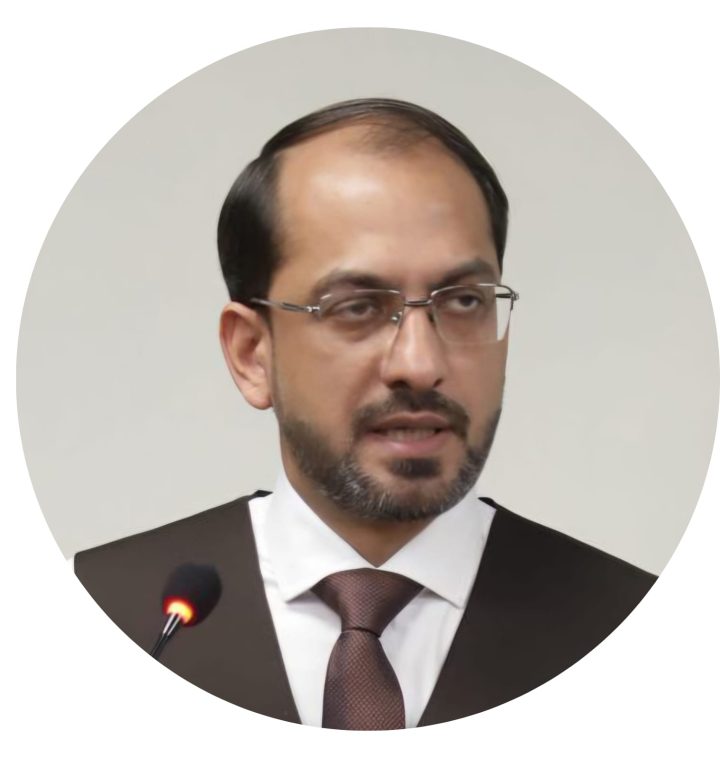
Muhammad Saad Zafar
Inflation Storm in Pakistan
“By a continuing process of inflation, governments can confiscate, secretly and unobserved, an
important part of the wealth of their citizens”, John Maynard Keynes. John Maynard Keynes was
an early 20th-century British economist, best known as the founder of Keynesian economics and
the father of modern macroeconomics.
The curse of inflation is far from over. Pakistan is once again experiencing significant inflationary
pressures. According to the Pakistan Bureau of Statistics (PBS), Consumer Price Index (CPI)
inflation increased to 11.1% year-on-year in August 2026.
Short-term price pressures are also evident. The Sensitive Price Indicator (SPI) increased by 8.62%
year-on-year during the week ending September 10, 2026. The increase was driven particularly
by higher prices of petroleum products and several essential commodities. The SPI is calculated
weekly to monitor price movements of essential items and assess short-term inflationary
pressures on households.
The persistent increase in prices is contributing to a cost-of-living crisis in Pakistan. This is taking
place alongside a challenging employment environment. Pakistan’s unemployment rate has risen
to 7.1%, with approximately 5.9 million people reported to be unemployed.
The combination of rising prices and limited employment opportunities is particularly concerning
for low-income and middle-income households. When incomes fail to keep pace with the cost of
essential goods and services, household purchasing power declines. Families are then forced to
reduce consumption, postpone healthcare and education expenditures, or rely increasingly on
savings or borrowing.
The increase in poverty in recent years has also been associated with prolonged economic shocks,
including high inflation. These developments have weakened purchasing power, increased food
insecurity and placed additional pressure on vulnerable households.
Income inequality has also worsened. The national Gini coefficient increased from 28.4 in 2018–
19 to 32.7 in 2024–25, with increases recorded in both urban and rural areas. This indicates that
recent economic pressures have been accompanied by widening disparities in income
distribution.
The persistence of inflation cannot be attributed to a single factor but poor government decision
and inefficient economic policies have further exacerbated the difficulties faced by the lowerincome and middle-income classes.
One of the most significant effects of the current inflationary environment is the erosion of
consumers’ purchasing power. As the prices of goods and services have increased, households
have to spend more to maintain the same level of consumption. This has reduced the disposable
income and have led to a decline in living standards.
This has also discouraged investment. High domestic costs are affecting Pakistan’s international
competitiveness, hence reducing the exports and productivity.
Energy prices remain one of the most important channels through which inflation can spread
throughout the economy. On September 12, 2026, petrol was increased to Rs375.82 per liter
while high-speed diesel rose to Rs403.32 per liter. The impact of higher fuel prices extends well
beyond the petrol station. This effect is also visible in the transport sector. The All Pakistan Goods
Transport Alliance has announced a 5% increase in freight charges in response to the increase in
petroleum prices. Higher transportation costs can, in turn, place additional upward pressure on
the prices of goods across the country.
Inflation, therefore, is not merely a matter of rising prices. It is a broader economic and social
challenge that affects purchasing power, employment, investment, inequality and living
standards.
The ultimate measure of successful economic policy should not simply be a temporary decline in
inflation, but whether ordinary citizens experience sustained improvements in their purchasing
power, employment opportunities, and overall standard of living.
Muhammad Saad Zafar Educationist
saadzafar2010@gmail.com